Step by Step All on 4 Implants for a Complete Smile
September 2, 2025

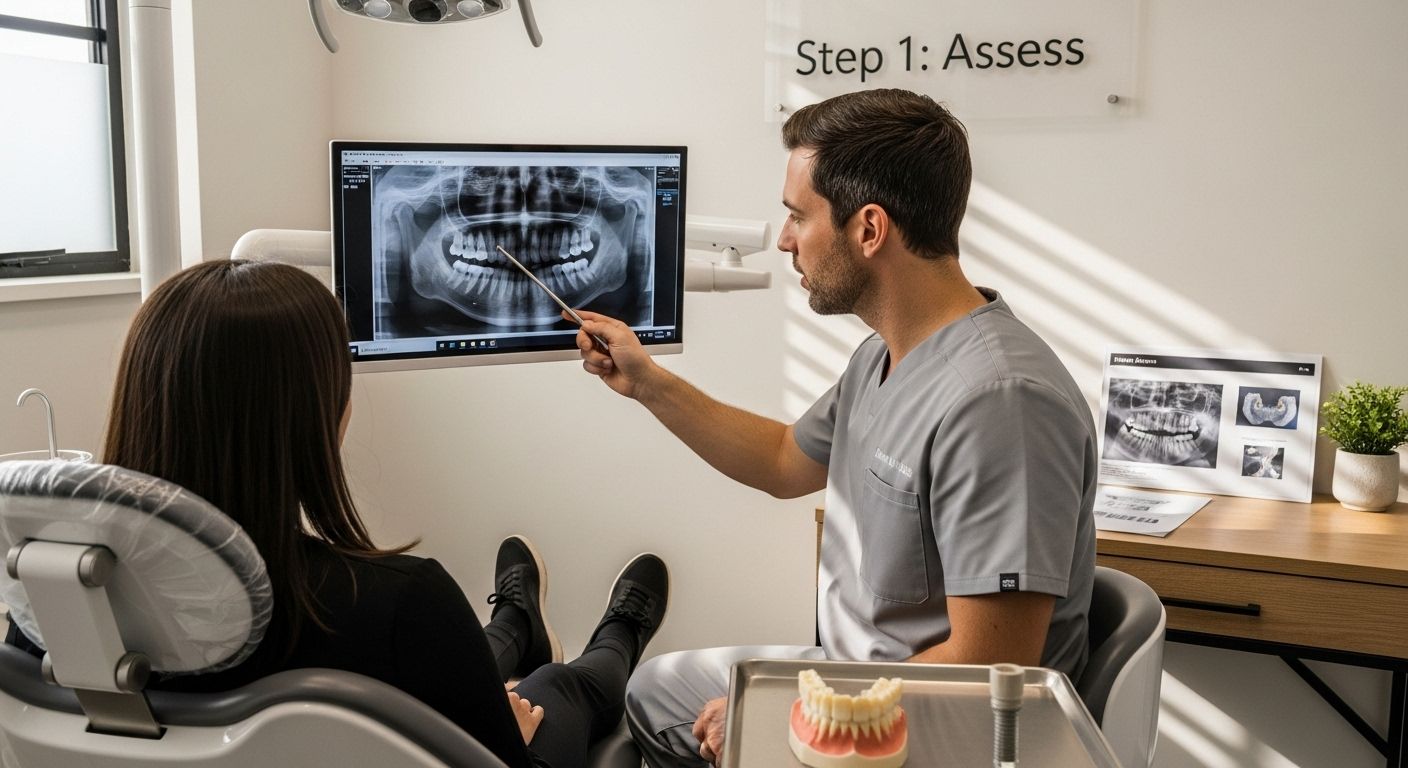
All on 4 dental implants promise a complete smile makeover in a single day. That sounds almost too good to be true and yet, studies show that all on 4 patients enjoy a remarkable 98% success rate after five years. Most people focus on the surgery, expecting that to be the hardest part. But the real secret is that your journey to a new smile depends much more on preparation, the right dental team, and daily habits than the procedure itself.
Quick Summary
| Key Point | Explanation |
|---|---|
| 1. Comprehensive dental assessment is essential | A detailed evaluation helps identify your specific needs and risks before implant treatment begins. |
| 2. Choose a qualified dental specialist | Research and select a board-certified dentist experienced in implant procedures for optimal results. |
| 3. Develop a personalized treatment plan | Your plan should address your unique oral health issues, aesthetic goals, and include a financial overview. |
| 4. Prepare thoroughly for surgery | Follow pre-surgical protocols and optimize health to ensure a smooth surgical experience and recovery. |
| 5. Establish a long-term maintenance routine | Regular check-ups and effective home care are crucial for the longevity and health of your implants. |
Step 1: Assess Your Dental Health Needs
Starting your all on 4 dental implants journey begins with a comprehensive assessment of your unique dental health landscape. This critical first step determines the foundation for your entire treatment strategy, helping dental professionals understand your specific needs and design a personalized approach to restoring your smile.
Understanding Your Current Dental Condition
A thorough dental health evaluation involves more than a simple visual examination. According to PubMed Central, a comprehensive patient assessment requires examining your complete medical and dental history, conducting detailed extra and intra-oral examinations, and utilizing advanced radiographic imaging techniques. Your dentist will carefully review several key factors that impact implant success:
- Overall oral health status
- Bone density and volume
- Existing medical conditions
- Periodontal disease indicators
Specifically, dental professionals will want to confirm that any active dental diseases are stabilized before proceeding with implant treatment. This might involve treating existing periodontal issues, addressing tooth decay, or managing other oral health challenges that could compromise implant success.
During this initial assessment, expect a series of diagnostic procedures including panoramic x-rays, 3D digital imaging, and potentially CT scans. These advanced imaging techniques provide an intricate view of your jaw’s structure, helping dentists precisely plan implant placement. The goal is not just to determine if you’re a candidate for all on 4 implants, but to create a roadmap that ensures optimal functional and aesthetic outcomes.
Your dentist will also evaluate lifestyle and health factors that might influence implant success. Conditions like diabetes, smoking, or certain autoimmune disorders can impact healing and integration. By identifying these factors early, your dental team can develop strategies to mitigate potential risks and improve your overall treatment prognosis.
Successful completion of this step means having a comprehensive understanding of your current dental health, potential challenges, and a clear treatment strategy tailored specifically to your needs. The insights gathered during this assessment will guide every subsequent stage of your dental implant journey.
Below is an overview table summarizing each major step in the all on 4 implants process, including its purpose and key outcomes at every stage.
| Step | Purpose | Key Outcome |
|---|---|---|
| Assess Dental Health Needs | Evaluate oral, medical, and bone health to identify suitability for implants | Comprehensive understanding of dental condition and candidacy |
| Consult Specialist | Meet with an experienced implant dentist to discuss options and planning | Selection of qualified professional and clear understanding of treatment pathway |
| Develop Treatment Plan | Create a personalized roadmap and financial overview using diagnostic imaging | Customized strategy for your restoration with detailed financial clarity |
| Prepare for Procedure | Complete medical, nutritional, and practical preparations before surgery | Optimal readiness for surgery with reduced risks |
| Execute All on 4 Procedure | Implant placement and immediate fitting of provisional teeth | Functional smile with temporary prosthetics post-surgery |
| Monitor & Maintain Oral Health | Professional checkups and diligent home care to sustain results | Long-term functionality, aesthetics, and implant longevity |
Step 2: Consult a Qualified Dental Specialist
After completing your initial dental health assessment, the next crucial step in your all on 4 implants journey is consulting a qualified dental specialist who can transform your understanding of potential treatment options. This consultation represents a pivotal moment where your personalized dental restoration strategy begins to take shape.
Selecting the Right Dental Professional
Choosing a specialist requires careful consideration and strategic research. Look for professionals with specific credentials in implant dentistry, particularly those who have extensive experience with full arch restoration techniques. Board certification in prosthodontics or oral surgery provides an additional layer of confidence in their expertise. According to National Institutes of Health research, successful implant therapy depends significantly on the specialist’s ability to comprehensively assess individual patient needs.
During your initial consultation, prepare a comprehensive list of questions that will help you understand the procedural details, potential challenges, and expected outcomes. Your discussion should cover several critical areas:
- Detailed explanation of the all on 4 implant procedure
- Your specific candidacy for the treatment
- Potential alternative options
- Expected recovery and healing timeline
- Total treatment costs and potential financing options
The consultation is more than a medical assessment. It represents an opportunity to establish trust and comfort with the dental team who will guide you through a transformative dental journey. A skilled specialist will not just evaluate your clinical requirements but also address your emotional and aesthetic goals.
Pay close attention to how the specialist communicates. They should explain complex medical concepts in clear, understandable language, demonstrating both technical expertise and genuine patient care. Watch for signs of thorough professional approach: comprehensive explanations, willingness to answer questions, and a commitment to personalized treatment planning.
Successful completion of this step means walking away with a clear understanding of your potential treatment pathway, confidence in your chosen specialist, and excitement about the possibility of restoring your smile. You should feel informed, supported, and ready to move forward with the next stages of your dental implant process.
Step 3: Develop a Customized Treatment Plan
With your initial consultation complete, the development of a customized treatment plan represents the intricate blueprint that will guide your entire all on 4 implants journey. This step transforms the broad insights gathered during your assessment into a precise, personalized roadmap tailored specifically to your dental restoration needs.
Crafting Your Personalized Dental Restoration Strategy
A truly effective treatment plan goes far beyond standard protocols. According to Foundation for Oral Rehabilitation, the planning must be prosthetically driven, meaning the final desired outcome guides every subsequent decision.
Your dental specialist will create a comprehensive plan that considers multiple critical factors:
- Bone density and volume
- Existing oral health conditions
- Aesthetic and functional goals
- Potential anatomical challenges
During this planning phase, advanced diagnostic imaging plays a crucial role. Three-dimensional CT scans and digital modeling provide an unprecedented level of detail, allowing your dental team to virtually plan implant placement with millimeter-level precision. These technologies enable specialists to navigate potential complications before the actual procedure, such as avoiding critical anatomical structures like nerve pathways or sinus cavities.
The treatment plan will also outline a detailed timeline, breaking down each phase of your restoration process. This might include preparatory procedures like potential bone grafting, the specific surgical approach for implant placement, and the design of your final prosthetic restoration. Your specialist will discuss expected healing periods, potential interim solutions, and the techniques they will use to ensure optimal implant stability and integration.
Financial considerations are equally important in this planning stage. A comprehensive treatment plan will provide a transparent breakdown of costs, potential insurance coverage, and available financing options. This transparency helps you make informed decisions and plan effectively for your dental restoration investment.
Successful completion of this step means having a crystal-clear, personalized roadmap that addresses your unique dental needs. You should feel confident, well-informed, and excited about the precise strategy that will transform your smile and oral health.

Step 4: Prepare for the Implant Procedure
As you approach the surgical phase of your all on 4 implants journey, comprehensive preparation becomes your key to a successful and smooth procedure. This critical step bridges the gap between planning and execution, ensuring you are physically and mentally ready for your transformative dental restoration.
Pre-Surgical Readiness and Protocols
Preparing for your implant procedure involves a multi-faceted approach that addresses medical, lifestyle, and personal health considerations. According to clinical research, advanced imaging techniques and precise surgical guides play a crucial role in treatment predictability, but patient preparation is equally important.
Your dental specialist will provide a detailed pre-surgical protocol that may include:
- Medical clearance from your primary care physician
- Specific dietary modifications
- Medication adjustments
- Pre-surgical hygiene instructions
In the weeks leading up to your procedure, focus on optimizing your overall health. This might involve adjusting certain medications, managing underlying health conditions, and ensuring your immune system is strong. Smokers will be advised to quit or significantly reduce smoking, as tobacco use can dramatically impact healing and implant integration.
Nutritional preparation is another critical aspect often overlooked. Your dental team might recommend a diet rich in vitamins and minerals that support healing, such as foods high in vitamin C, protein, and calcium. Hydration becomes crucial, and you might be advised to increase water intake while reducing alcohol consumption.
Practical preparation extends beyond medical considerations. Arrange for transportation on the day of surgery, as you will likely be under sedation or experiencing post-surgical effects. Prepare your home environment with soft foods, ice packs, prescribed medications, and comfortable recovery spaces. Stock up on nutritional smoothies, protein shakes, and other easy-to-consume foods that support healing.
Mental preparation is equally important. Many patients experience anxiety before surgical procedures, so discuss any concerns with your dental specialist. Some practices offer pre-surgical counseling or relaxation techniques to help you feel more comfortable and confident.
Successful completion of this step means feeling fully prepared, informed, and ready for your transformative dental procedure. You should have a clear understanding of pre-surgical expectations, have made necessary lifestyle and health preparations, and feel mentally confident about your upcoming treatment.
The following table organizes pre-surgical preparation actions you should take to ensure a smooth all on 4 implant procedure and recovery.
| Preparation Action | Details | Purpose |
|---|---|---|
| Medical Clearance | Obtain approval from your physician | Reduce medical risks during surgery |
| Dietary Modifications | Follow specialist-recommended nutrition and hydration guidelines | Support healing and prepare body for recovery |
| Medication Adjustments | Modify or pause specific medications as directed | Prevent adverse effects and bleeding risks |
| Pre-Surgical Hygiene | Practice thorough dental cleaning and follow hygiene instructions | Lower infection risk and promote oral health |
| Smoking Cessation | Quit or reduce tobacco use as advised by your dentist | Improve healing and implant integration |
| Arrange Transportation | Secure a ride for your procedure day | Accommodate effects of sedation and safety |
| Prepare Home Environment | Stock soft foods, recovery items, and medications | Ensure comfort and easy recovery at home |
Step 5: Execute the All on 4 Implant Procedure
The day of your all on 4 implant procedure represents a transformative moment in your dental restoration journey. This precise surgical intervention transforms years of planning into a life-changing solution that will restore both function and confidence to your smile.
The Surgical Precision of All on 4 Implantation
According to clinical research from the National Institutes of Health, the all on 4 procedure requires meticulous surgical planning and execution. The process begins with administering local anesthesia, ensuring your complete comfort throughout the procedure.
Your surgical team will follow a carefully choreographed sequence:
- Precise soft tissue management
- Strategic implant positioning
- Immediate prosthetic fitting
- Comprehensive surgical protocols
The most remarkable aspect of the all on 4 technique is its efficiency. Unlike traditional implant methods requiring multiple surgeries, this approach allows for immediate load-bearing implants. Your dental specialists will strategically place four precisely angled implants in areas of maximum bone density. The posterior implants are typically angled up to 45 degrees, which allows for optimal bone engagement and provides enhanced stability.
During the procedure, your surgical team will use advanced 3D imaging and computer-guided techniques to ensure millimeter-perfect placement. This technological precision minimizes surgical invasiveness while maximizing long-term success. The goal is not just to place implants but to create a foundation that mimics natural tooth roots, providing unparalleled support for your new prosthetic arch.
Immediate prosthetic placement is a hallmark of the all on 4 technique. This means you will leave the surgical suite with a functional set of temporary teeth, eliminating the extended waiting periods associated with traditional implant procedures.
Your dental team will meticulously adjust and fit these provisional teeth, ensuring proper bite alignment and aesthetic harmony.
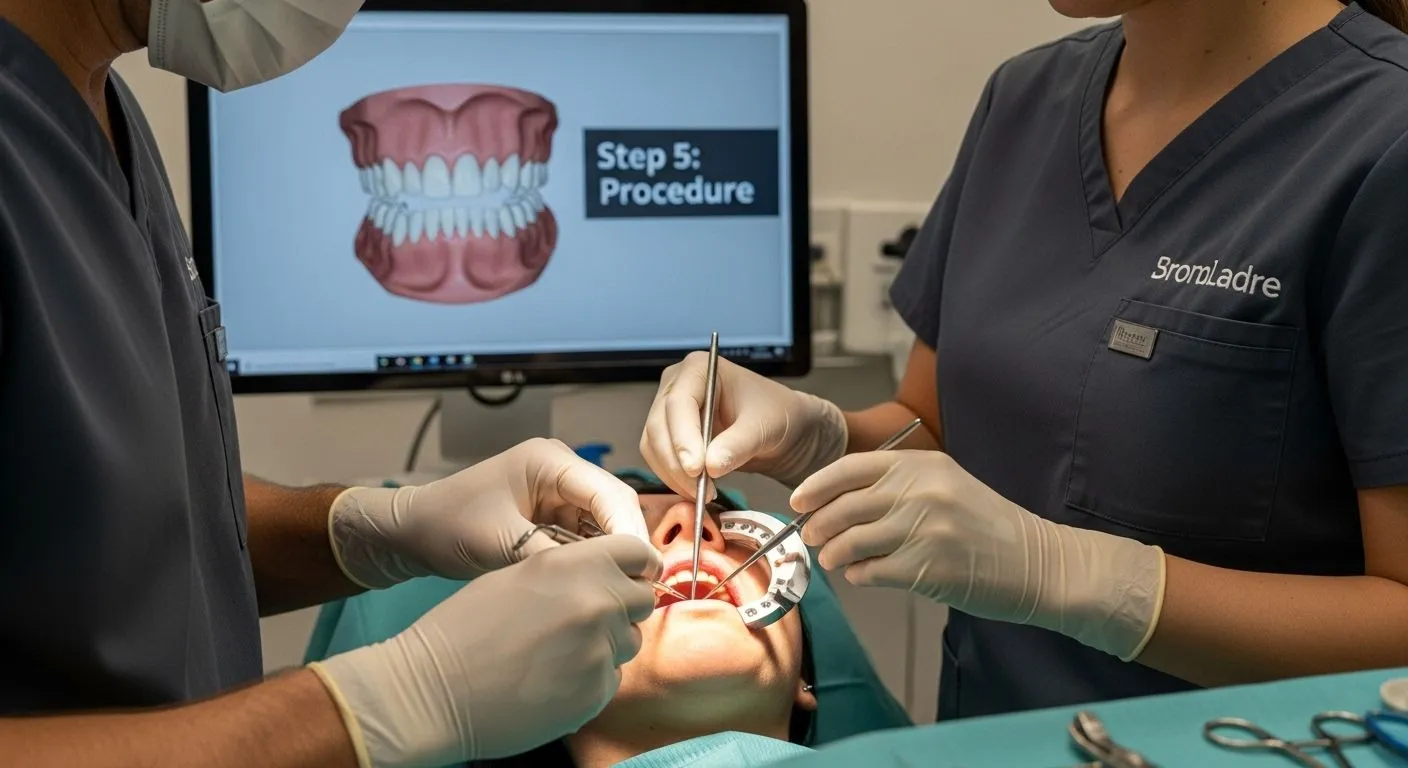
The entire procedure typically takes between two to three hours, though this can vary depending on individual complexity. Your surgical team will work with incredible precision, balancing technical expertise with artistic consideration of your facial structure and aesthetic goals.
Successful completion of this step means emerging from surgery with strategically placed implants and a temporary prosthetic that restores your smile’s function and appearance. You should feel a sense of transformation and hope, knowing that your journey to a renewed smile is well underway.
Step 6: Monitor and Maintain Your Oral Health
Your all on 4 implant journey doesn’t conclude with the surgical procedure. Long-term success depends on diligent monitoring and consistent maintenance of your new dental restoration. This critical step ensures the longevity, functionality, and aesthetic appeal of your investment.
Comprehensive Oral Health Maintenance Strategy
According to research from the National Institutes of Health, maintaining your implants requires a proactive and personalized approach. Professional monitoring combined with meticulous at-home care becomes your blueprint for sustained oral health.
Your maintenance routine should encompass several key elements:
- Regular professional dental examinations
- Comprehensive radiographic evaluations
- Personalized oral hygiene protocols
- Lifestyle and dietary considerations
Professional follow-up becomes a cornerstone of your implant maintenance. Your dental specialist will recommend a tailored recall schedule, typically every six months, which includes comprehensive clinical assessments and radiographic imaging. These evaluations help detect potential issues early, such as minor inflammation or slight implant modifications, preventing more significant complications.
At-home care requires a strategic approach different from traditional dental maintenance. Your dental team will provide specialized instructions for cleaning around implants, which might include unique tools like water flossers, soft-bristled brushes, and specific interdental cleaning devices. The goal is to maintain impeccable oral hygiene without compromising the delicate soft tissue surrounding your implants.
Dietary and lifestyle considerations play a surprising role in implant longevity. Certain habits like smoking, excessive alcohol consumption, and high-sugar diets can negatively impact implant health. Your dental specialist might recommend nutritional strategies that support bone health and reduce inflammation, creating an optimal environment for long-term implant success.
Potential challenges such as peri-implant mucositis or more serious peri-implantitis can be mitigated through vigilant monitoring. Any signs of discomfort, changes in implant stability, or aesthetic modifications should prompt immediate professional consultation. Your proactive approach can prevent minor issues from developing into significant complications.
Successful completion of this step means establishing a comprehensive, personalized oral health maintenance protocol that ensures your all on 4 implants remain functional, healthy, and aesthetically pleasing for years to come. You are not just maintaining dental work but investing in your long-term quality of life.
Ready for a Confident, Complete Smile?
If you are feeling overwhelmed by missing teeth, complicated dental needs, or the uncertainty surrounding full arch restoration, you are not alone. The article has shown that taking the first step with a thorough assessment and a skilled team is essential—but knowing where to turn can be stressful. At Arvada Dental Center, our focus on all on 4 implants and full arch solutions means you are never just a number. Our caring experts use the latest imaging technology and personalized planning, exactly as described in your step by step guide, to rebuild healthy smiles for patients across Arvada and the Denver metro area.
.jpg)
Trust your next step to the team that specializes in the All on 4 Implants procedure. Why wait another day to reclaim comfort, function, and confidence? Discover your personal roadmap—visit our General Dentistry Practice or schedule your all on 4 consultation today at Arvada Dental Center. Experience the complete care and lasting results you deserve.
Frequently Asked Questions
What are all on 4 implants?
All on 4 implants are a dental restoration solution that involves placing four strategically positioned implants to secure a full arch of prosthetic teeth. This technique allows for immediate load-bearing and is designed for patients with significant tooth loss or needing full-arch rehabilitation.
How long does the all on 4 implant procedure take?
The all on 4 implant procedure typically takes between two to three hours. This duration can vary depending on individual patient complexities and the specifics of each case, including any preliminary procedures that may be required.
What is the recovery process like after getting all on 4 implants?
Recovery after the all on 4 procedure varies among individuals, but patients can generally expect some swelling, discomfort, and sensitivity for a few days. Most patients are able to return to normal activities within a few days, with full recovery taking several weeks as the implants integrate with the jawbone.
How do I maintain my all on 4 implants for long-term success?
Maintaining your all on 4 implants involves regular dental check-ups, thorough at-home oral hygiene practices, and a healthy lifestyle. It’s important to follow your dental specialist’s recommendations, including using special cleaning tools and avoiding habits like smoking that can negatively affect implant health.
Recommended
- Why Zirconia Bridges Are Perfect for Strong, Natural Teeth
- Cost of Dental Implants
- How to Clean All On 4 Dental Implants?
- What Makes Mini Dental Implants Different from Regular Implants?
- A Comprehensive Guide to Dental Implants
More Posts
.jpg)
Understanding All on 4 Cost Factors for Dental Implants
.jpg)
7 Key Advantages of Dental Implants for Your Smile