How to Recognize a Dental Emergency: Your Step-by-Step Guide
September 5, 2025

A dental emergency can strike without warning and sometimes the difference between saving or losing a tooth comes down to minutes. Most people are surprised to learn that dental emergencies make up nearly 2 million ER visits in the US each year. What catches many off guard is that knowing just a few critical symptoms and the right immediate steps can cut your risks and costs dramatically.
Quick Summary
| Key Point | Explanation |
|---|---|
| 1. Recognize dental emergency symptoms | Severe tooth pain, swelling, and bleeding indicate urgent dental issues needing immediate attention. |
| 2. Assess severity of symptoms | Evaluate pain intensity and duration to determine if immediate care is necessary or if it can wait for a regular appointment. |
| 3. Prepare information before visiting a dentist | Document symptoms, medical history, and treatments to aid dentists in providing accurate care during emergencies. |
| 4. Take immediate actions for injuries | For knocked-out teeth, try to reinsert them or preserve them in milk; pain management starts with warm salt water rinses. |
| 5. Follow up after emergency treatment | Adhere to prescribed care instructions and attend follow-up appointments to monitor recovery and prevent complications. |
Step 1: Identify Common Symptoms of Dental Emergencies
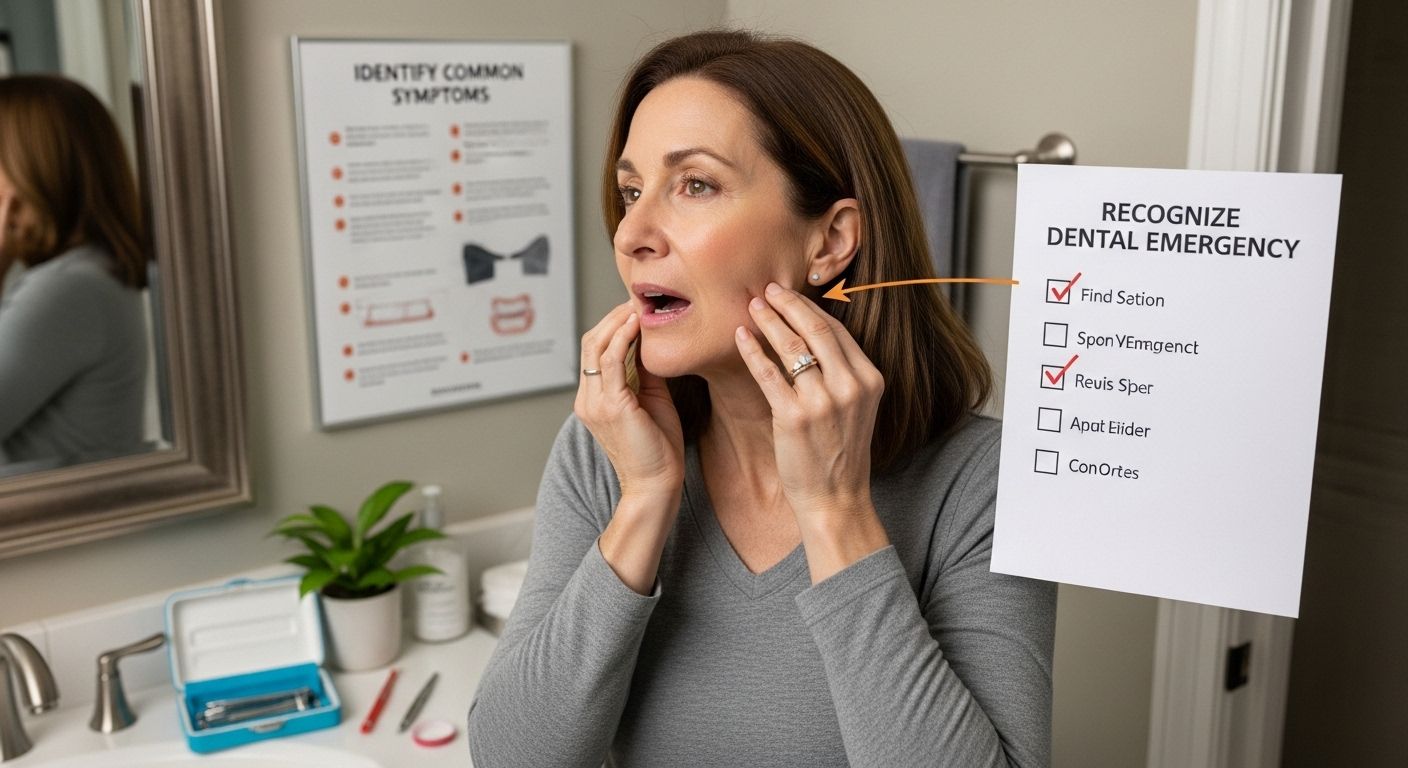
Recognizing a dental emergency starts with understanding the warning signs that indicate immediate professional intervention is necessary. Dental emergencies are not just inconvenient experiences but potentially serious health risks that require swift action. When your mouth signals distress through specific symptoms, knowing how to interpret these signs can mean the difference between preserving your oral health and facing more complex medical challenges.
The most critical symptoms that suggest a dental emergency include severe, persistent tooth pain that disrupts daily activities, significant facial or gum swelling, uncontrolled bleeding, and trauma involving your teeth or oral tissues. A throbbing pain that intensifies when eating, drinking, or applying pressure typically signals an underlying issue like an abscess or advanced infection. Swelling around your jaw, cheeks, or gums accompanied by fever could indicate a serious bacterial infection spreading beyond your tooth.
Physical tooth damage also constitutes an urgent situation. Completely knocked-out teeth, fractured teeth with exposed nerves, or large chunks missing from your teeth require immediate professional assessment. These scenarios can lead to permanent tooth loss if not addressed quickly. Pay close attention to signs like sharp pain when biting, visible cracks, or teeth that feel loose or have shifted position.

Learn more about emergency dental interventions to understand the nuanced indicators that demand professional attention.
If you experience any combination of these symptoms or feel something is significantly wrong with your oral health, trust your instincts. Dental professionals recommend seeking immediate care within 24-48 hours of noticing these warning signs. Waiting too long can transform a manageable issue into a complex, potentially more expensive medical problem. Your quick recognition and response are fundamental in protecting your long-term dental wellness.
Step 2: Assess the Severity of the Situation
Once you have identified potential symptoms of a dental emergency, the next critical step is accurately assessing the severity to determine the appropriate course of action. Not all dental issues require immediate professional intervention, but some demand urgent attention to prevent long-term damage or significant health complications. Understanding the difference between a minor concern and a true emergency can save you time, money, and potential future medical challenges.
Severity assessment begins with carefully evaluating the intensity and duration of your symptoms. Persistent pain that disrupts daily activities, prevents eating or sleeping, or radiates across your face signals a high-priority situation. Sharp, continuous pain accompanied by fever, significant swelling, or uncontrolled bleeding indicates a potentially serious infection or trauma that requires immediate professional evaluation. Minor tooth sensitivity or occasional discomfort might suggest a less urgent issue that can be addressed during a standard dental appointment.
Understand emergency dental protocols by considering several key factors. Physical tooth damage provides critical severity indicators. A completely knocked-out tooth, large fractures exposing nerves, or significant pieces missing represent urgent scenarios that demand rapid professional intervention within 24-48 hours. These situations can potentially lead to permanent tooth loss or complex reconstructive procedures if not addressed quickly. Conversely, small chips or minor cracks might be manageable with less immediate treatment.
Your overall health context also plays a crucial role in severity assessment. Patients with preexisting conditions like diabetes, compromised immune systems, or ongoing medical treatments might need more aggressive responses to dental emergencies. Trust your instincts. If a dental issue feels significantly wrong or causes substantial discomfort, seeking professional evaluation is always the safest approach. Remember, early intervention can transform a potentially complex medical challenge into a manageable treatment plan.
Step 3: Gather Relevant Information Before Visiting a Dentist
Preparing for a dental emergency involves more than just recognizing symptoms. Collecting and organizing critical information before your dental visit can significantly streamline your treatment process and help healthcare professionals provide more accurate and efficient care. This preparatory step transforms a potentially chaotic emergency into a structured, manageable medical interaction.
Start by documenting a comprehensive medical snapshot that provides context for your dental emergency. Compile a detailed timeline of your symptoms, including when they first appeared, their progression, and any potential triggers. Note specific details like the location of pain, its intensity, and any activities that worsen or alleviate the discomfort. If you experienced physical trauma, record the exact circumstances of the injury. This information helps dental professionals understand the root cause and develop an appropriate treatment strategy.
Check out our patient preparation guide to ensure you have all necessary documentation. Your medical history plays a crucial role in emergency treatment. Compile a list of current medications, existing health conditions, allergies, and recent medical procedures. This information prevents potential complications and helps dentists select the most appropriate intervention. Patients with conditions like diabetes, heart disease, or compromised immune systems require special considerations during dental emergencies.
Before leaving for your appointment, gather practical items that will support your visit. Bring your identification, insurance card, and a method of payment. If possible, collect any relevant dental records, previous X-rays, or documentation of recent dental work. Take photographs of the affected area if safe to do so, as visual evidence can provide additional diagnostic insights. By methodically preparing this information, you transform a potentially stressful emergency into a structured, efficient medical consultation that maximizes your chances of swift and effective treatment.
| Preparation Item | Description | Completed (✔/✗) |
|---|---|---|
| Symptom Timeline | Note when pain or symptoms started, progression, and triggers | |
| Medical History | List current conditions and previous dental treatments | |
| Current Medications | Bring a list of all medications you are taking | |
| Allergies | Document any known drug or material allergies | |
| Identification & Insurance | Bring ID and insurance card for registration and billing | |
| Dental Records/X-rays | Collect previous dental images or treatment documents if available | |
| Photos of Affected Area | Take clear pictures to help with diagnosis if safe to do so | |
| Method of Payment | Have a payment option ready in case immediate treatment is required |

Step 4: Determine the Appropriate Immediate Actions
When faced with a dental emergency, your initial response can significantly impact the outcome of your treatment and potential long-term oral health. Understanding how to react quickly and effectively is crucial in managing unexpected dental situations that can cause pain, potential tooth loss, or further complications. The moments immediately following a dental emergency are critical for minimizing damage and setting the stage for successful professional intervention.
For situations involving knocked-out teeth, time is of the essence. If a tooth has been completely dislodged, handle it carefully by the crown, avoiding touching the root. Rinse the tooth gently with clean water if it’s dirty, but do not scrub or remove any attached tissue fragments. If possible, attempt to reinsert the tooth into its original socket, holding it in place by gently biting down on a clean cloth or piece of gauze. If reinsertion is not feasible, place the tooth in a container of milk, saline solution, or a specialized tooth preservation product to maintain its viability.
Learn more about emergency dental protocols to ensure you’re prepared for unexpected oral injuries.
In cases of severe toothache or suspected infection, immediate pain management and prevention of further spread are paramount. Rinse your mouth with warm salt water to help reduce inflammation and provide temporary relief. Apply a cold compress to the outside of your cheek to minimize swelling and numb pain. Over-the-counter pain relievers can offer temporary comfort, but avoid placing aspirin directly on the gums, as this can cause chemical burns. If you notice significant swelling, persistent fever, or signs of spreading infection, seek professional medical attention immediately. Your quick and calculated response can prevent minor dental issues from escalating into more serious health complications, potentially saving your tooth and protecting your overall well-being.
| Emergency Type | Immediate Actions | Purpose |
|---|---|---|
| Knocked-Out Tooth | Handle by crown, rinse with water, reinsert or store in milk/saline | Preserve tooth viability for possible reimplantation |
| Severe Toothache | Rinse mouth with warm salt water, apply cold compress, use OTC pain relief | Reduce pain and swelling until professional help |
| Facial Swelling | Apply cold compress, monitor for signs of infection, seek prompt care | Control swelling, detect spreading infection |
| Uncontrolled Bleeding | Apply clean gauze with gentle pressure, seek immediate professional care | Stop bleeding and prevent major complications |
| Broken/Chipped Tooth | Save missing fragments, rinse mouth gently, protect area if sharp | Prevent further injury and facilitate repair |
Step 5: Contact Your Dentist or Emergency Services
Navigating the critical moment of reaching out for professional help during a dental emergency requires strategic communication and clear information sharing. The goal of this step is to connect with the right medical professional who can provide immediate guidance and appropriate treatment. Your approach to communication can significantly impact the speed and effectiveness of your emergency response.
When contacting your dentist, provide a concise yet comprehensive description of your situation. Clearly articulate the nature of your dental emergency, including the symptoms, duration, and any immediate actions you’ve already taken. If your regular dental office is closed or unable to provide immediate assistance, do not hesitate to seek emergency dental services or visit an urgent care facility. Explore our emergency dental resources to understand the range of support available during unexpected oral health crises.
Prepare key information before making the call to ensure efficient communication. Have your personal details, medical history, current medications, and insurance information readily available. If you are experiencing a severe emergency with uncontrolled bleeding, significant pain, or potential infection, do not delay seeking help. In such instances, visiting an emergency room might be the most appropriate course of action. Dental professionals recommend explaining your symptoms clearly, mentioning any known allergies or existing medical conditions, and asking about the recommended next steps. Your proactive communication can help medical professionals assess the urgency of your situation and provide tailored advice that minimizes potential long-term complications and ensures your immediate oral health needs are met efficiently.
Step 6: Follow Up on Treatment and Care
After receiving emergency dental treatment, your journey to full recovery has only just begun. The follow-up phase is crucial in ensuring complete healing, preventing potential complications, and maintaining long-term oral health. This step involves more than simply waiting for symptoms to disappear it requires active engagement with your dental care plan and a commitment to understanding your specific recovery needs.
Immediate post-treatment care involves carefully following your dentist’s specific instructions. Pay close attention to prescribed medications, recommended pain management techniques, and any dietary restrictions. Some treatments might require you to avoid certain foods, minimize physical activity, or maintain specific oral hygiene practices. Learn about comprehensive post-treatment recovery strategies to support your healing process effectively. Watch for any unusual symptoms such as increased pain, unexpected swelling, or signs of infection that might indicate a need for additional medical intervention.
Scheduling and attending all recommended follow-up appointments is essential for monitoring your recovery progress. These appointments allow your dental professional to assess healing, make necessary adjustments to your treatment plan, and catch any potential issues early. During these visits, be prepared to discuss your recovery experience, any lingering symptoms, and ask questions about long-term care strategies. Your active participation in the follow-up process demonstrates a proactive approach to your oral health. Remember that successful recovery is a collaborative effort between you and your dental care team, requiring patience, diligence, and open communication to ensure the best possible outcome for your dental emergency treatment.
Get Rapid, Reliable Relief for Your Dental Emergency in Arvada
When sudden tooth pain, swelling, or trauma strikes, hesitation can put your health and your smile at risk. You just learned how easily a dental emergency can turn critical if ignored. The pain, swelling, and uncertainty you are feeling now can quickly become a bigger problem without prompt care. The professionals at Arvada Dental Center understand how urgent these moments are.

Don’t let uncertainty slow you down. Our expert team is equipped to handle everything from severe toothaches and knocked-out teeth to complicated oral injuries. We offer same-day emergency appointments and advanced solutions so you do not have to wait in pain or worry about lasting damage. Visit our emergency dentistry page to see how we help people just like you every day. Take action now and trust your emergency to the leading dental team in Arvada and Denver. Schedule your urgent visit directly through our contact portal and regain your peace of mind today.
Frequently Asked Questions
What are the most common symptoms of a dental emergency?
Common symptoms of a dental emergency include severe tooth pain, significant facial or gum swelling, uncontrolled bleeding, and trauma involving teeth or oral tissues. If you experience a throbbing pain, swelling accompanied by fever, or physical damage to your teeth, it may indicate a dental emergency.
How can I assess the severity of my dental issue?
Assess the severity by evaluating the intensity and duration of symptoms. Persistent pain, swelling, or bleeding suggests a high-priority situation, while minor discomfort may be less urgent. It’s important to trust your instincts and seek professional evaluation if you feel something is significantly wrong.
What immediate actions should I take in a dental emergency?
In a dental emergency, immediate actions include rinsing your mouth with warm salt water for relief, applying a cold compress to reduce swelling, and seeking professional help without delay. If a tooth is knocked out, handle it by the crown and place it in milk or saline until you can see a dentist.
How should I prepare for my dental emergency appointment?
Prepare for your appointment by documenting your symptoms, compiling your medical history and current medications, and gathering identification and insurance information. This preparation helps streamline your treatment and ensures the dental professional has all necessary details.
More Posts
.jpg)
Understanding All on 4 Cost Factors for Dental Implants
.jpg)
7 Key Advantages of Dental Implants for Your Smile